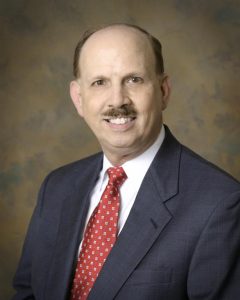
By Megan M. Sloane, J.D.
Emotional support animal (ESA) letters may seem like routine documentation reports for a psychotherapist to prepare. However, improperly issuing one can put a mental health professional’s license at risk. These letters sit at the intersection of federal fair housing protections, state housing law, and professional licensure requirements. Failing to evaluate a patient properly or making unsupported statements about a disability can lead to disciplinary action by the Florida Department of Health (DOH).
This two-part series explains the governing standards and examines how deficient ESA documentation can create disciplinary exposure for licensed clinical social workers, licensed marriage and family therapists, licensed mental health counselors, and other Florida health care practitioners.
To read part 2 of this series, click here.
What Is an Emotional Support Animal?
An emotional support animal, commonly called an “ESA,” is an animal whose presence alleviates one or more identified symptoms or effects of a person’s disability. Unlike a service animal, an ESA does not require training to perform a specific task.
Florida’s Legal Requirements for Emotional Support Animal Letters
Under Florida law, healthcare practitioners must have personal knowledge of a patient’s disability and disability-related need for a specific emotional support animal before providing supporting documentation.
Florida law does not establish a universal minimum number of appointments or a mandatory treatment period. However, practitioners must conduct a professionally appropriate assessment and have sufficient information to support their conclusions.
Simply accepting a patient’s statements or completing an online questionnaire may not provide an adequate foundation for issuing an ESA letter.
How Can Improper ESA Letters Lead to Professional License Discipline?
Under Section 456.072, Florida Statutes, healthcare practitioners may face disciplinary action for providing documentation supporting an ESA without the required personal knowledge. For licensed clinical social workers, licensed marriage and family therapists, and licensed mental health counselors, a violation of the general health-professions disciplinary statute may support action by the applicable licensing board. Section 491.009, Florida Statutes.
Depending on the circumstances, disciplinary consequences may include fines, reprimands, continuing education, probation, suspension, or restrictions on preparing future ESA letters.
Florida Disciplinary Cases Offer Practical Guidance
Several Florida administrative law cases involving license discipline demonstrate the potential consequences of improperly preparing ESA letters. These cases are all public records available online.
The DOH alleged that a licensed clinical social worker issued an ESA letter after an individual completed a brief online questionnaire, without conducting a personal interview or appropriate assessment. The case ended in a negotiated final order imposing a letter of concern, a $500 administrative fine, costs, specified continuing education, and a one-year restriction on writing or issuing ESA documentation. The practitioner neither admitted nor denied the complaint’s factual allegations for purposes of the settlement.
The practical lesson is not that online or telehealth care is inherently inadequate. Rather, the practitioner must be able to demonstrate a professionally sufficient assessment and personal knowledge before making clinical representations to a housing provider.
2. Department of Health v. Deborah Z. Weatherby, Fla. DOH Case No. 2018-22106
The DOH alleged that a practitioner issued an ESA letter without sufficient assessment or a personal interview. The complaint also raised concerns about informed consent and inadequate patient records. The negotiated discipline included remedial education, costs, and a one-year prohibition on preparing ESA letters.
This case illustrates that an ESA investigation can extend beyond the letter itself. The informed-consent process, assessment, diagnosis, treatment records, billing documentation, and accuracy of the practitioner’s representations can all receive scrutiny.
3. Department of Health v. Ruth Ann Goode, Fla. DOH Case No. 2020-38529
The DOH’s administrative complaint alleged that a practitioner issued an ESA letter claiming a professional relationship, evaluation, and personal knowledge that were not supported by the The case ended in a settlement agreement and imposed a reprimand, a $1,500 fine, remedial education, and a permanent restriction against writing, submitting, or approving ESA letters for patients, former patients, or nonpatients.
The lesson is straightforward: an ESA letter must not overstate what the practitioner did, what professional relationship exists, or what the practitioner knows. Representing that an evaluation or treatment relationship occurred when it did not can materially increase the seriousness of the alleged misconduct.
Be sure to read part two of this blog series for even more information.
Contact Health Law Attorneys Experienced in Investigations of Mental Health Counselors, Psychologists, Social Workers, and Family Therapists
The attorneys of The Health Law Firm provide legal representation to mental health counselors, psychologists, psychiatrists, social workers, and family therapists in Department of Health (DOH) investigations, Department of Regulatory Agencies (DORA) investigations, board hearings, licensing defense, FBI investigations, and other types of investigations of health professionals and providers.
To contact The Health Law Firm, please call (407) 331-6620 or toll-free at (888) 331-6620 and visit our website at www.TheHealthLawFirm.com.
About the Author: Megan M. Sloane is a member of The Florida Bar who practices health law with The Health Law Firm in its Altamonte Springs, Florida, office. She is a member of the Health Law Section of The Florida Bar and the American Health Law Association (AHLA). www.TheHealthLawFirm.com. The Health Law Firm, 1101 Douglas Avenue, Suite 1000, Altamonte Springs, FL 32714, Phone: (407) 331-6620 or Toll Free: (888) 331-6620.
KeyWords: Representation for licensed mental health counselors (LMHCs), mental health counselor defense lawyer, ESA letter defense attorney, licensed professional counselor (LPC) defense attorney, mental health counselor legal representation, licensed professional counselor (LPC) legal representation, social worker defense lawyer, representation for social workers, social worker defense attorney, social worker complaint cases, Florida D.C. Louisiana mental health counselor complaint cases, defense lawyer for psychologists, Florida health law defense attorney, medical license defense attorney, licensed mental health professional defense attorney, healthcare professional license defense lawyer, Florida Department of Health (DOH) attorney, Health Law Firm reviews, reviews of The Health Law Firm attorneys, administrative complaint defense lawyer, administrative complaint defense attorney, administrative hearing defense lawyer, administrative hearing defense attorney, administrative hearing defense legal counsel, representation for health care professionals, emotional support animal letter lawyer, license complaint investigation defense
“The Health Law Firm” is a registered fictitious business name of and a registered service mark of The Health Law Firm, P.A., a Florida professional service corporation, since 1999.