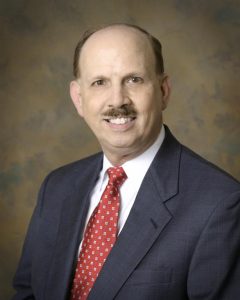
 By George F. Indest III, J.D., M.P.A., LL.M., Board Certified by The Florida Bar in Health Law
As is well-known by now, in a significant policy shift, U.S. President Donald Trump signed an executive order on December 18, 2025, directing the federal government to loosen long-standing regulations on marijuana. The order instructs the Attorney General to move forward with reclassifying marijuana under federal law, a change that could reshape the legal landscape for healthcare providers, medical professionals, and the broader healthcare industry.
It is believed that this will be just one of several different drugs to be reclassified, many having previously been prohibited as having no known medical use.
Marijuana Law and Federal Reclassification Explained.
Under current federal law, marijuana has long been classified as a Schedule I controlled substance, alongside drugs deemed to have no accepted medical use and a high potential for abuse. President Trump’s order signals a formal shift away from that framework. The directive instructs the attorney general to move marijuana from the highly restrictive Schedule I tier under the federal Controlled Substances Act to the more loosely regulated Schedule III.
Marijuana reclassification would move cannabis to a lower schedule, acknowledging potential medical uses and allowing expanded research, prescribing considerations, and regulatory oversight. If that happens, the psychoactive plant would be listed alongside common painkillers, ketamine and testosterone as a less dangerous drug.
However, even under a reclassification, recreational use of marijuana will still be illegal at the federal level and many federal restrictions would still apply.
Additionally, the order includes provisions to improve access to Cannabidiol products (CBD). The Centers for Medicare and Medicaid Services (CMS) is expected to launch a Medicare pilot program for CBD products in April 2026. The program would enable certain Medicare-covered seniors to receive free, doctor-recommended CBD products.
Impact on Healthcare Industry and Medical Professionals.
The order will acknowledge potential medical uses and allow expanded research, prescribing considerations, and regulatory oversight. The marijuana legal impact on healthcare providers will vary depending on practice type, state law, and federal agency guidance. Providers should expect continued scrutiny related to medical prescribing practices, clinical research approvals, hospital policies, and Medicare and Medicaid participation.
Despite reclassification, providers must remain cautious. Medical professionals may face legal challenges involving licensing and credentialing disputes, DEA actions, employment-related compliance claims, and billing issues tied to federally funded healthcare programs. Providers are strongly encouraged to consult experienced healthcare legal counsel before expanding cannabis-related services or altering clinical protocols. Assumptions about prescribing authority or regulatory leniency may result in serious compliance violations.
Contact Experienced Health Law Attorneys for Marijuana Regulatory Matters and Other Health Care Licensing Matters.
The Health Law Firm attorneys can assist health care providers and facilities, such as doctors, pharmacists, and pharmacies, wanting to participate in the medical marijuana industry. We can assist in matters involving marijuana law, litigation, and regulatory compliance. Our attorneys assist clients in navigating complex and evolving cannabis regulations and defend providers facing proceedings brought by state regulators or agencies.
To contact The Health Law Firm please call (407) 331-6620 and visit our website at www.TheHealthLawFirm.com.
Sources:
Reisman, Sam. “Trump Orders Loosening Of Federal Restrictions On Marijuana.” Law360. (December 18, 2025). Web.
Holland, Steve. “Trump signs order to ease US marijuana regulations, sparking industry hopes.” Reuters. (December 18, 2025). Web.
Fountain, Luke. “Trump signs executive order reclassifying cannabis, opening door to broader weed access.” CNBC. (December 18, 2025). Web.
About the Author: George F. Indest III, J.D., M.P.A., LL.M., Board Certified by The Florida Bar in Health Law is an attorney with The Health Law Firm, which has a national practice. Its main office is in the Orlando, Florida, area. www.TheHealthLawFirm.com The Health Law Firm, 1101 Douglas Avenue, Suite 1000, Altamonte Springs, Florida 32714, Phone: (407) 331-6620 or Toll-Free: (888) 331-6620.
“The Health Law Firm” is a registered fictitious business name of and a registered service mark of The Health Law Firm, P.A., a Florida professional service corporation, since 1999.
Copyright © 2026, George F. Indest III, The Health Law Firm. All rights reserved. No part of this work may be reproduced in any form in any medium without the express written permission of the copyright holder. The copyright holder reserves the exclusive right to have his name associated with this work.